Hydronet / Platform
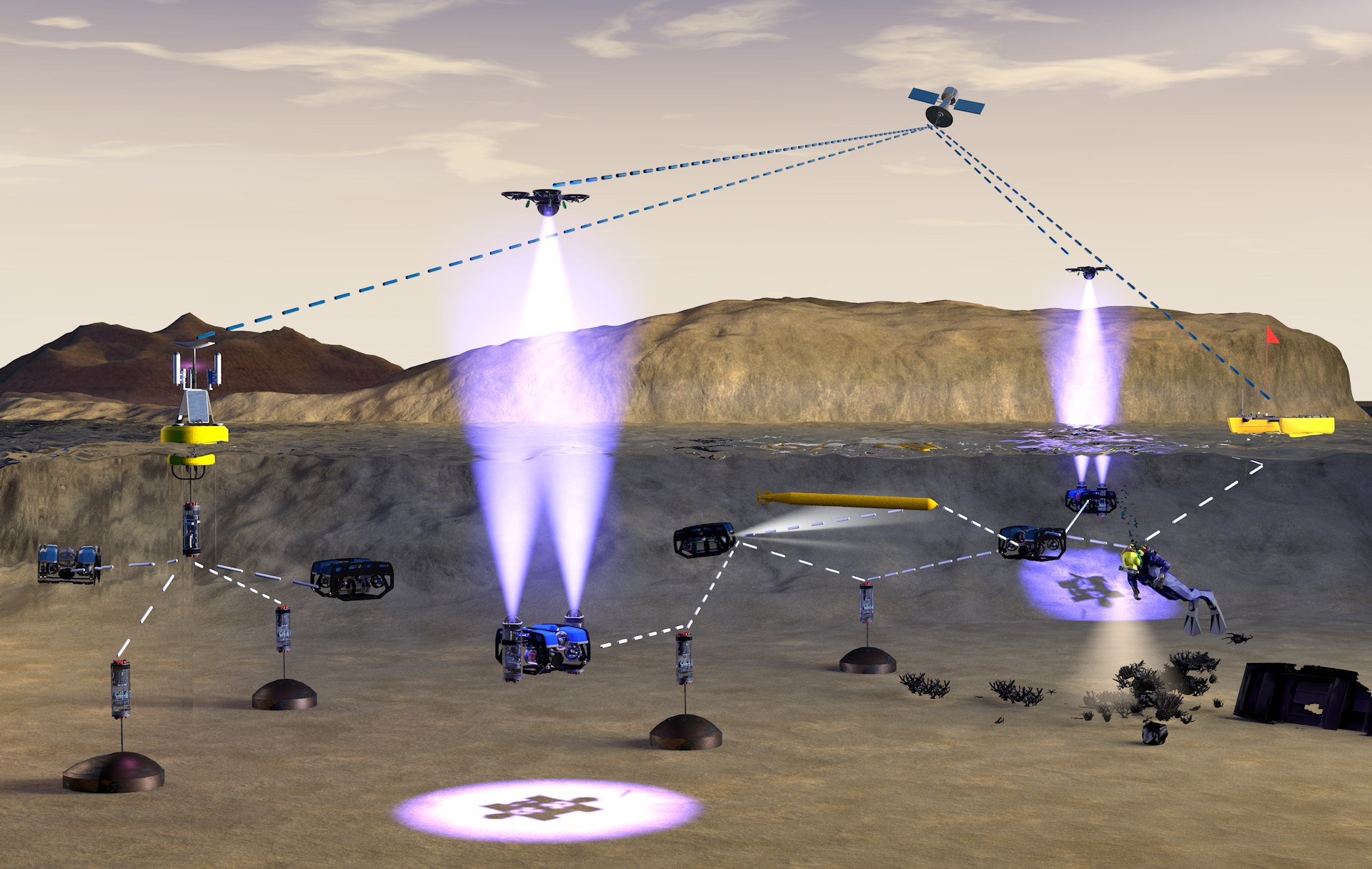
An open, modular architecture that turns the ocean from a dark, disconnected space into a connected, intelligent network.
Connectivity and intelligence, on one open, modular, software-defined platform — running on nodes we build, or hardware you already own.
Seabed to space
Commercial products
One platform · five products
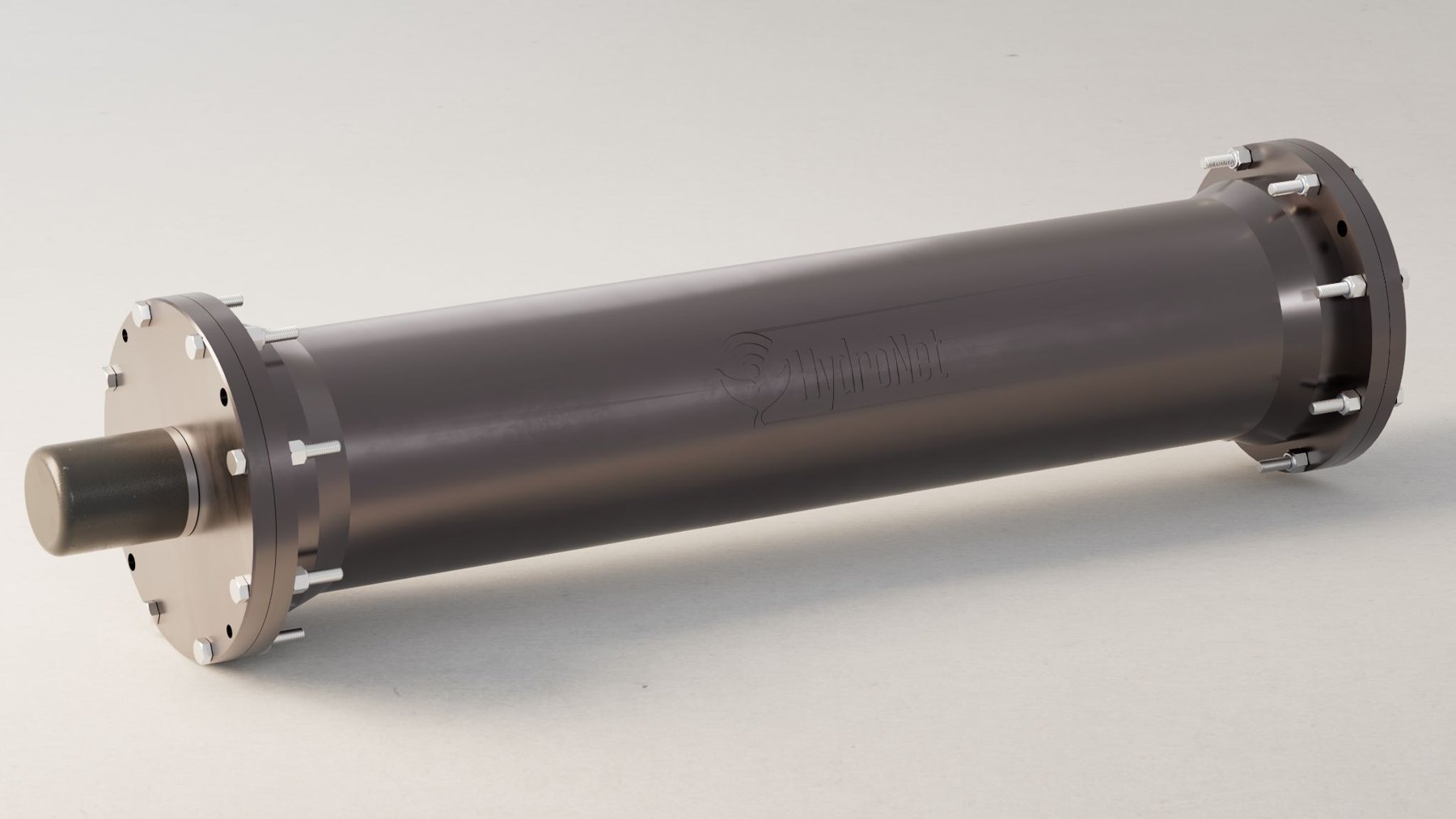
Hydronet Nexus
Software-defined modem & edge node
The sensor, the modem, and the edge computer — for the ocean.
One node replaces all three. Communication, networking, sensing, processing, and analytics are all defined in software — reconfigured in the field, upgraded without touching the hardware.
Software-defined
Field-reconfigurable — ZP-OFDM, DSSS, CSS, MCSS, FSK and more, switched in real time; custom waveforms via GNU Radio, MATLAB, and Docker
Multi-modal
Acoustic and ultrasonic front-ends spanning 0–10 MHz, plus optical visible-light channels — all on a single node
AI adaptation
Waveform, power, and modulation adapt continuously in dynamic, contested, congested water — without operator input
Mesh networking
HydroMesh multi-hop routing, relay selection, and self-healing — scalable to 100+ node persistent deployments with real-time C2
Sensing + comms
Communications, active sensing, and passive sensing converge on one node — replacing dedicated modem and hydrophone hardware
Interoperable
Phorcys · JANUS (STANAG 4748) · STANAG 4817 · TAK integration — proven in NATO, U.S. Navy, and AUKUS exercises
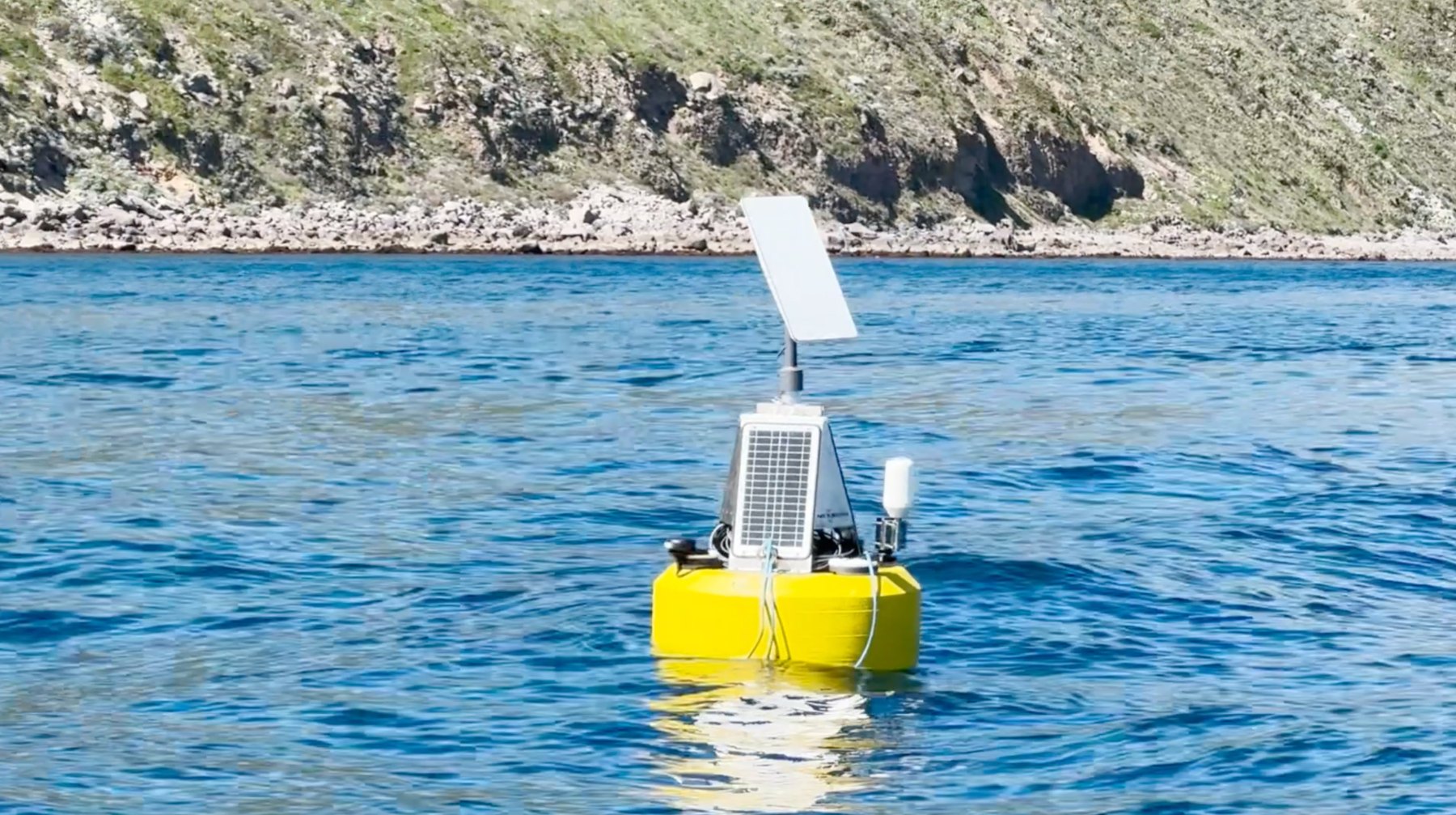
HydroBuoy
Solar-powered surface gateway
The gateway for multi-domain connectivity.
HydroBuoy is the gateway node — it bridges the underwater world to air and space, so subsea data reaches operators in real time: from the water, to space over Starlink, down to the cloud. On-board inference means only results traverse the uplink.
Connectivity
Cellular · Starlink · RF-Mesh · Iridium — seamless across every link
Endurance
Solar-powered — months-long unattended deployments
Edge AI
On-board inference, control, and data analytics
Interconnection
Hub for maritime systems, visualized with the Hydronet Dashboard
Multi-domain
Data transfer from underwater to space
Monitoring
Data collection, real-time monitoring, and edge computing
HydroMesh: Networking Suite
Connectivity
The undersea communication backbone — resilient, dynamic, autonomous.
Nodes on the seabed, on vehicles, and on surface gateways discover each other and route data around interference, jamming, or a lost node. The stack is fully programmable from waveform to network layer — AI-driven modulation adapts each link to the channel it actually has, and new capability ships as a software update, not new hardware. Vehicles, sensors, and command finally talk to each other beneath the surface.
Routing
Self-healing, AI-enabled rerouting — resilient C3 and data flows in denied or degraded environments
Adaptation
Waveform agility, frequency diversity, dynamic spectrum access, and LPI/LPD communications — autonomous response to interference and jamming
Cross-layer
Waveform to network layer in one programmable stack — routing informed by live physical-layer conditions
Addressing
IP-native — every subsea node is a standard, addressable endpoint
Range & rate
Every combination of power and bandwidth — high data rates over hundreds of meters, low rates beyond 10 km
Portability
Runs on Nexus, or ported onto third-party modems
HydroID: Edge AI Suite
Intelligence
Every node is also a sensor.
The mesh continuously listens to its environment — passively, without emitting. On top of that raw data, AI models run directly on the underwater infrastructure, not in the cloud: detecting, classifying, and tracking what’s happening, then streaming tracks and alerts over the mesh instead of raw signal. The result is a persistent, real-time picture of the underwater space — a vessel, a diver, a change on a pipeline or cable — instead of a snapshot you get weeks later.
Targets
Vessels · divers · UUVs · marine mammals · man-made noise · waveforms
Acoustic
Passive detection, classification, tracking, and localization from the hydrophone array
Visual
Object detection and classification from cameras in dynamic marine conditions
Inference
On the node, not the cloud — tracks and alerts traverse the uplink, raw signal never has to
Fusion
AIS · radar · sonar · environmental sensors, fused into one picture
Model updates
New models trained in the Digital Twin deploy back to fielded nodes
Digital Twin & Dashboard
Mission planning · C2 · model training
The entire network — planned, commanded, and improved from the cloud.
Everything the network learns flows into the Hydronet Digital Twin — mission planning, modeling and simulation, data visualization and analytics, and asset management, in the cloud. New AI models train on fleet data and deploy back to the nodes.
Mission planning
Plan, model, and simulate before anything gets wet
Visualization
Network topology · live link quality · telemetry replay
Command & control
Remote tasking, real-time streaming, and asset management — the Dashboard is live C2 for the fleet
Model training
New AI models trained on fleet data, deployed back to the field
Scalability
Capable of emulating large sets of nodes, end to end
Interfaces
gRPC · Protobuf · cloud-native storage